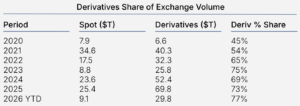
Crypto trading has slowly been shifting from spot to derivatives, and the public exchanges have moved with it. Derivatives were 45% of exchange volume in 2020. This year they’ve hit 77%.
The Shift From Spot to Derivatives
Derivatives passed spot in 2021 and reached 75% by 2023, driven by leverage, professional traders replacing retail, and ETFs taking spot demand off the exchanges. The reality is most derivative volume is leveraged 10x and has far lower fees as a result, so it’s not quite the same as spot volume. The main use case became hedging and short-term trading by funds and market makers.
Exchanges Bought Their Way Into Derivatives
Coinbase started with FairX in 2022, a CFTC regulated futures exchange that Architect Partners advised on, then paid $2.9 billion for Deribit in 2025, the largest crypto M&A deal to date. Kraken spent about $2.2 billion on NinjaTrader, Small Exchange and Bitnomial. Robinhood launched perps in Europe and has announced them for the US. Gemini has its licenses and is waiting on approval. Derivatives became so important, it was a must own through acquisition.
Where the Derivatives Stand Today
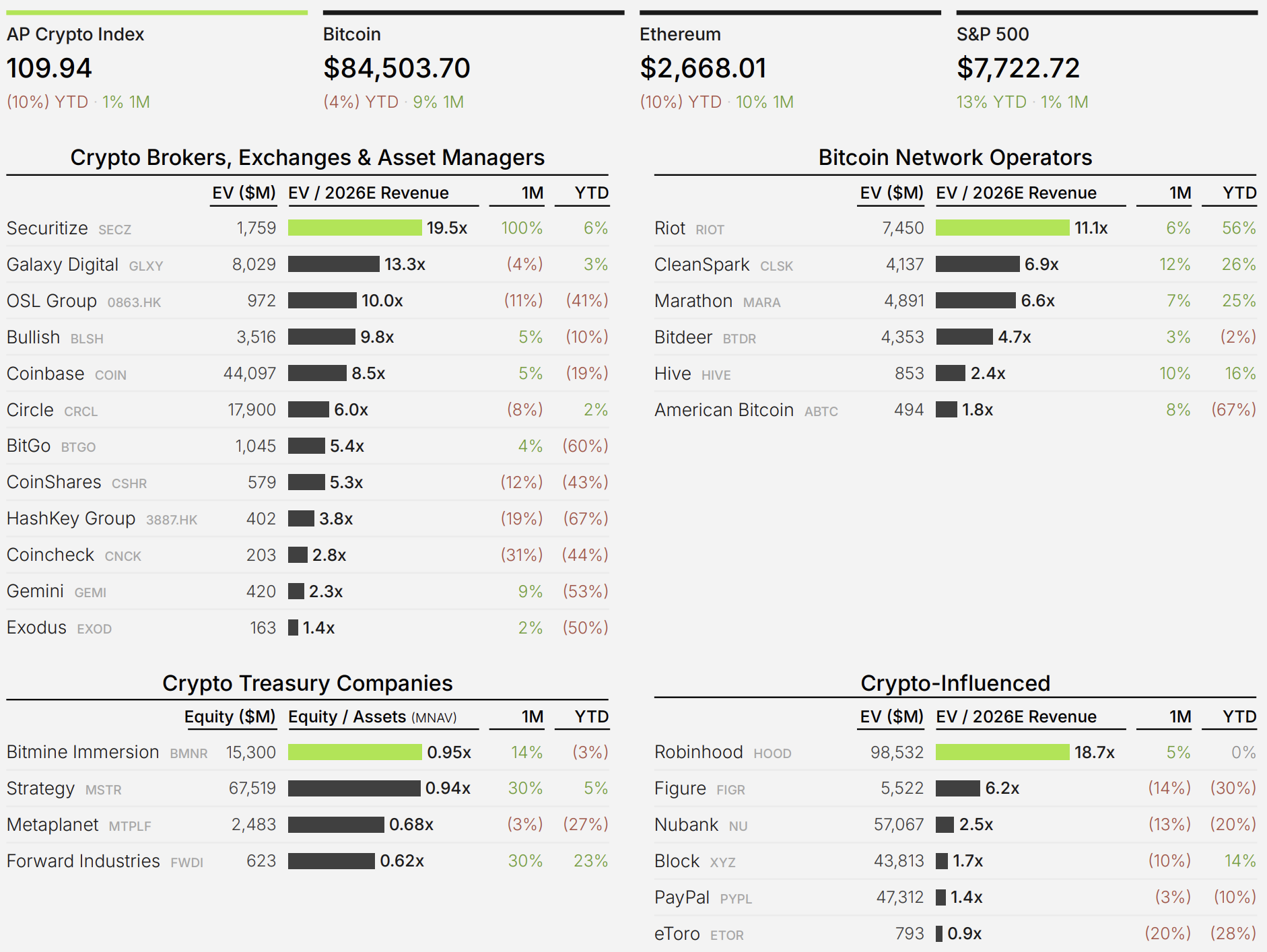
Derivatives were 80% of exchange volume over the summer, the highest on record. Both spot and derivatives fell this year, but spot fell further, as it does in every down market. Coinbase now mirrors the market at 79% derivatives, while the rest of the group is still spot. The next step is the US, where retail has never been allowed to trade perps and the volume has sat offshore. The CFTC opened the door in May. Kraken went live in June, Coinbase has its CFTC relief, and Robinhood and Gemini are waiting on approvals.