This past week, Dunamu and Naver Financial shareholders approved their equity swap, effectively completing the merger. Following the acquisition, it has been announced that the combined company intends on pursuing an eventual uplisting to Nasdaq in the United States.
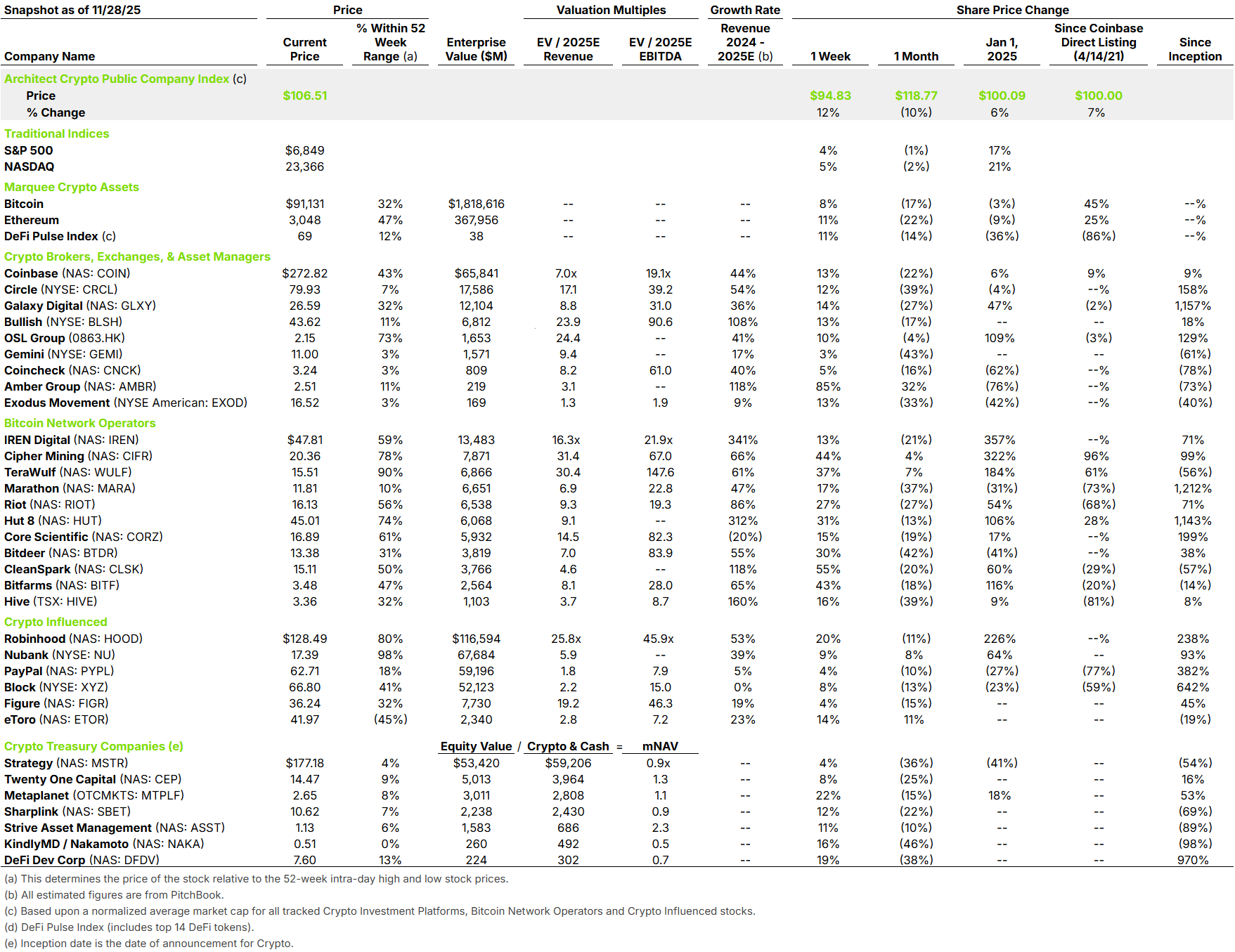
Uplisting, moving from a junior or alternative market to a higher-tier exchange, is not new in crypto. Several of the names we track have done it. Marathon Digital, CleanSpark, Exodus Movement, and OSL migrated from over-the-counter venues to more established exchanges, while Bitfarms, Hive, Hut 8, and Galaxy Digital moved from Toronto listings into U.S. markets. The motivation is straightforward: a senior exchange like Nasdaq or NYSE brings more institutional investors, higher liquidity, tighter spreads, and better odds of index and ETF inclusion. That typically lowers the cost of capital, supports valuation, and makes equity a more usable currency for deals and compensation, in exchange for higher reporting and governance burdens.
The path is rarely smooth. Galaxy Digital spent years working through SEC comments, redomiciling, and a full reorganization before finally securing a Nasdaq listing, while WonderFi filed for Nasdaq, updated investors repeatedly, and ultimately sold to Robinhood instead of completing the move. Crypto issuers tend to face tougher SEC scrutiny on token activities and digital asset accounting, often need to simplify offshore or complex holding structures, and must meet stricter U.S. accounting, governance, and listing thresholds for price, market cap, and shareholder base.
Dunamu and Naver would run into many of the same issues. Dunamu is dealing with a recent 35.2 billion won (~$25 million) AML fine and a temporary restriction on new customer onboarding, which will sit prominently in any SEC or exchange review. Structurally, a Korean-listed tech group owning a Korean crypto exchange will need a clean holding structure, clear segment separation, and reconciled accounting and governance acceptable to both Korean regulators and the SEC, similar to the corporate work Galaxy undertook. On top of that, a dominant retail exchange with recent AML sanctions and stablecoin ambitions trying to list in the U.S. will invite close scrutiny on investor protection, token listing standards, and custody practices. None of this means Dunamu cannot ultimately uplist; it can. It simply suggests that reaching Nasdaq via a traditional route is likely a multi-year project. However, for a top-tier Asian crypto exchange and mid-scale fintech that would almost certainly find an audience among investors seeking both crypto and geographic diversification, it will certainly be worth while.